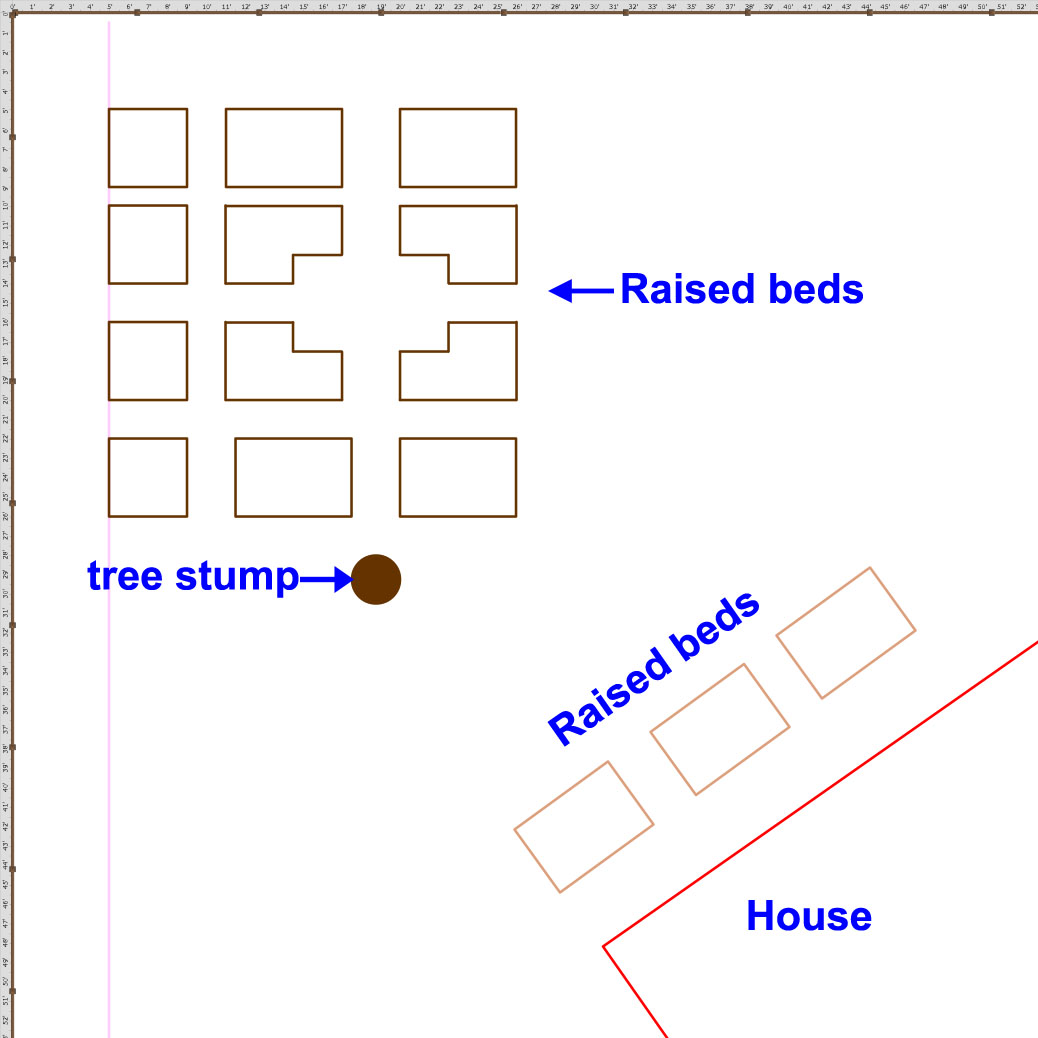
After analyzing the soil in our backyard, the next step is to design the garden. I wanted a simple productive garden, and my wife wanted a garden worthy of Pintrest.com. For those of you unfamiliar with Pintrest, it is a website that makes all of my projects look inferior. So like many things in marriage we compromised: we used the cloud based software from www.growveg.com to design the garden area. The garden will be epically beautiful like Versailles, and I can harvest a ton of veggies. I will make a separate post about the software. This picture shows the raised bed layout in the northwest corner of our yard where we cut down the tree:
After laying out the basic garden area, we had to figure out how to add amendments to the soil. Since the the first four to six inches of soil contain most of the nutrients and soil life, it is best not to disturb this layer and instead to add organic matter on top. However this is also the slowest way to condition the soil…and we want to grow crops NOW! The next best thing is to till the amendments into the soil then inoculate with microorganisms to jump start the soil ecosystem again. Here’s the process:
1) add the correct amount of organic fertilizer and soil amendments (see previous post Step 1: Soil Analysis)
2) add some compost
3) inoculate the soil with microorganisms and root fungi
4) till all this into the ground with this tiller
5) cover with newspaper to smother the grass and weeds (don’t use the glossy pages)
6) drop on a raised bed and fill it with half decomposed wood chips
Once I calculated the right amount of organic fertilizer (based on the analysis and recommendations from Texas A&M soil lab), I simply made a big bucket full and used 1.8 lbs per 4′ x 6′ plot.
Next I spread half a bag of cotton burr compost over each plot to get some organic matter into the soil. I bought the compost from the local gardening store Marshall Grain. You can use any organic compost, but cotton burr is a good bang for the buck at $9 for a big 3 cu ft bag.
Then I added a cap-full of microorganisms and root fungi to a watering can and spread it on the area. The microorganisms will get the soil healthy again and break down organic matter.
Finally I used my new electric tiller to chop up the top few inches of soil. There were so many small roots from grasses, bushes, and crepe myrtle trees that I would till for about 30 seconds then spend the next 5 minutes removing tangled roots from the blades. I probably could have rented a heavy duty gas tiller…but for a little more money I now own one.
After adding amendments, compost, bio-inoculants and tilling them into the soil, I watered the area (using filtered chlorine-free water) and covered it with newspaper. Newspaper will smother any grasses or weeds that try to grow in this newly awesome soil. Wal-Mart actually had stacks of free newspapers that I graciously accepted…I even left a few for the folks who actually read them. I only used the paper printed with soy inks because they will decompose (not the shiny papers for advertisements). Once the newspaper was laid out about 5-8 sheets thick over the entire plot area, I dumped on some half decomposed wood chips. This newspaper/wood chip technique works very well and you can learn all about it at the Back to Eden website. Basically the wood chips break down over a few years time and create excellent soil.
Then I dropped on a 4′ x 6′ raised bed that I made out of cedar fence board planks and spread out the wood chips evenly to several inches depth. The deeper the better, up to a foot deep is still OK, but I didn’t have that much wood chips. I used cedar fence boards for the raised beds because it is naturally bug resistant and doesn’t have any formaldehyde or preservatives that leach into the soil.
Whew! Even I was sweating writing this post. It actually took several weekends to get all this stuff done. But now we can plant seeds! Stay tuned…

 The Lazy Texas Gardener